{"currentLocale":{"locale":"en","locale_name":"English"},"translations":[],"translationsAvailable":false}

Get funding through the Depot Charging Scheme

17eac16f9d131772fff994c36e51bab8bf786e75

Your depot now qualifies for up to £1m in government funding, thanks to the UK's new Depot Charging Scheme. Battery storage is eligible and it has a direct impact on how your depot performs once chargers are installed. iwell can help shape the technical case behind your submission.

Speak to iwell about your application

First Depot Charging Scheme window only open until June 2026

The first application window opened on 25 March 2026 and closes on 30 June 2026, or earlier if funds have been allocated.

Applications are assessed on a first come, first served basis.

For the Depot Charging Scheme, timing and clarity both matter. Submitting early improves your chances, but a weak energy plan limits what your site can actually deliver once installed.

Battery storage changes both the design and the economics of your application.

How iwell supports your Depot Charging Scheme application

iwell provides battery storage and energy management designed around real depot conditions, vehicle schedules, grid limits and site demand.


Battery Energy Storage Systems (BESS)

  • Store energy when supply is available or cheaper, reducing operation costs

  • Deliver power when multiple vehicles are charging, creating less dependance on a slow grid connection

  • Reduce pressure on grid connections, supporting a credible charging plan, even with constrained infrastructure

  • Limit peak demand charges, decreasing long-term costs

Energy Management System (EMS)

  • Coordinates charging across vehicles and infrastructure, reflecting how the site will actually operate

  • Controls when energy is stored or discharged, letting your depot stay within grid limits without curtailing charging

  • Keeps the site operating within grid constraints, ensuring connection capacity is a limited factor in your application

  • Adjusts automatically as demand changes, designing a system that scales as your fleet grows

As part of your Depot Charging Scheme application, iwell supports:

  • System sizing based on fleet plans and depot load

  • Cost modelling based on expected usage

  • Integration of BESS into your application

  • Technical inputs to support a clear, credible submission
NEW afa99668c2ae66fd16f88d44c83f7c3fb0bc112e-1

Can battery storage be included in a Depot Charging Scheme application?

Yes, Battery Energy Storage Systems (BESS) can be included where they support EV charging infrastructure at the depot. 

How much funding does the Depot Charging Scheme provide?

Up to £1 million per organisation in the first application window, covering up to 70% of eligible chargepoint and civil costs, including BESS supply and installation. 

Do I need electric vehicles in my fleet already?

You need to show that your fleet includes, or will include, electric vans, HGVs or coaches, and how that affects your charging demand. 

How many depots can be included in a Depot Charging Scheme application?

There is no limit on the number of sites, but only one application per organisation. 

What if my depot has limited grid capacity?

Battery storage allows charging infrastructure to operate without relying entirely on grid upgrades. 

What is the deadline for the first Depot Charging Scheme window?

Applications close 30 June 2026, or earlier if funding is fully allocated. Projects must be completed by 31 March 2027. 

What role does iwell play in the application?

iwell supports the technical side, such as system design, sizing and the integration of battery storage into the application. 

Independent EV charging with EMS + BESS

iwell works with transport operators to design, size and support BESS and energy management.

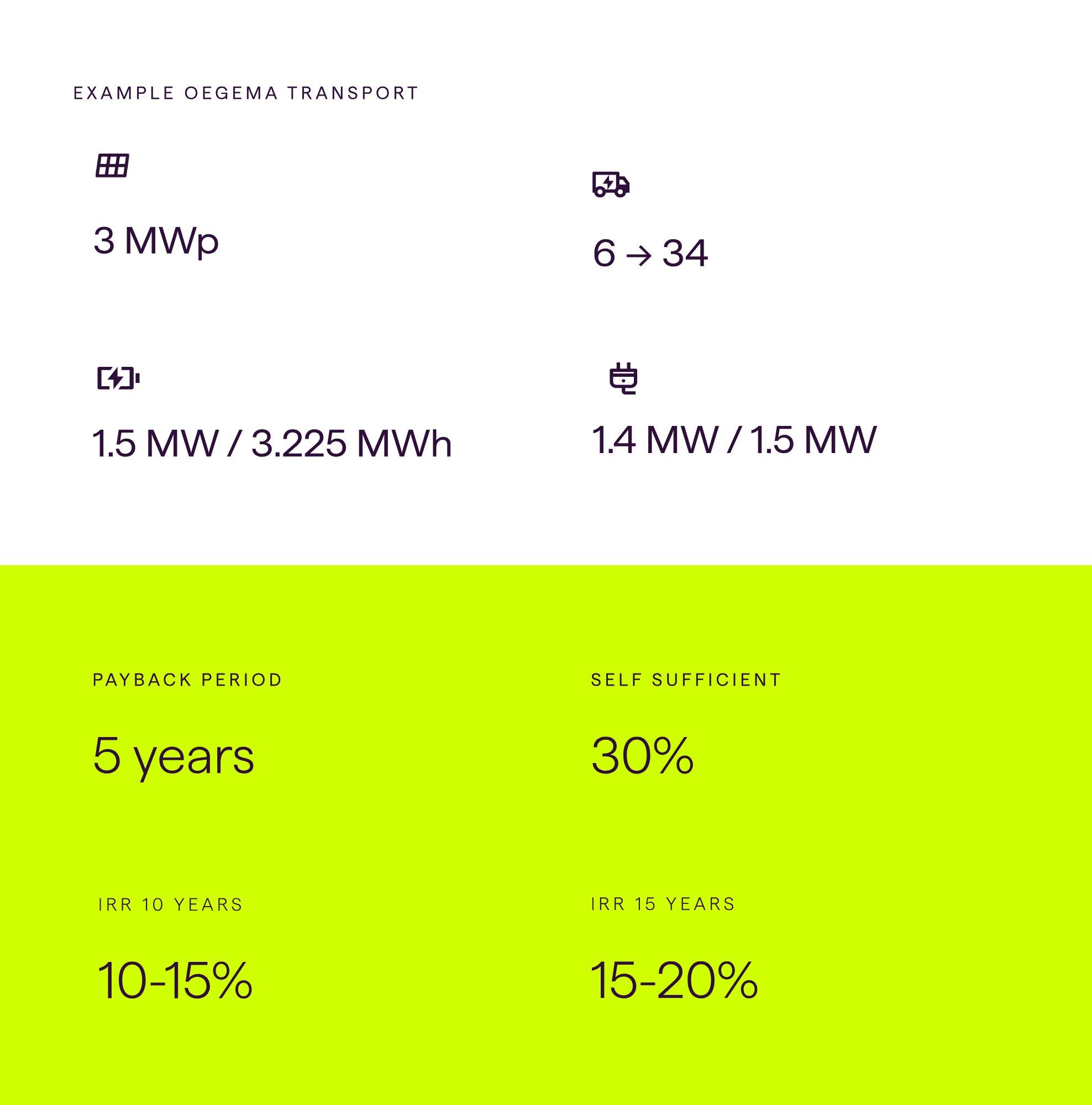
One fleet operator came to iwell with a familiar problem: the site couldn’t draw enough power to support the number of vehicles planned. Instead of waiting on grid upgrades, they installed battery storage with an energy management system.

The result:

  • Vehicles charged on-site without delays

  • Peak demand reduced, lowering energy costs

  • More control over when and how power was used

  • A system that adjusted as fleet demand changed


The depot kept operating at pace, without depending on grid reinforcement timelines.

This is just one example of energy independence in practice. For UK fleet operators applying to the Depot Charging Scheme, iwell brings that same approach: proven battery storage, energy management, and the technical expertise to back a strong application.

Example Oegema Case NL.pdf

Plan your application with the whole energy system in mind

Let’s design your depot charging properly from the start.

Use the scheme to include battery storage, and you can future-proof your depot from day one. We’ll help you define the system before you submit.  

Battery storage affects how your depot performs long after the grant is awarded.

More cases

300+ success stories

With over ten years of experience and more than 300 successful installations, we know what works. We translate complex energy challenges into proven solutions. 

24/7 monitoring and management

 From Europe, we continuously monitor your system. One point of contact within iwell, quick follow-up, and the certainty that everything works as it should. 

Developed in the EU

Our software is developed, hosted and managed within Europe. Secure, reliable and under our own control.

From plan to installation

We create the business case, tailor the system to your location and ensure flawless execution. One point of contact at iwell, with everything sorted. 

Curious how we can help your business?

Schedule a meeting
headerimg-4

Mark Duxbury

Country Director UK