












200 EBS e-buses powered in a grid-constrained region
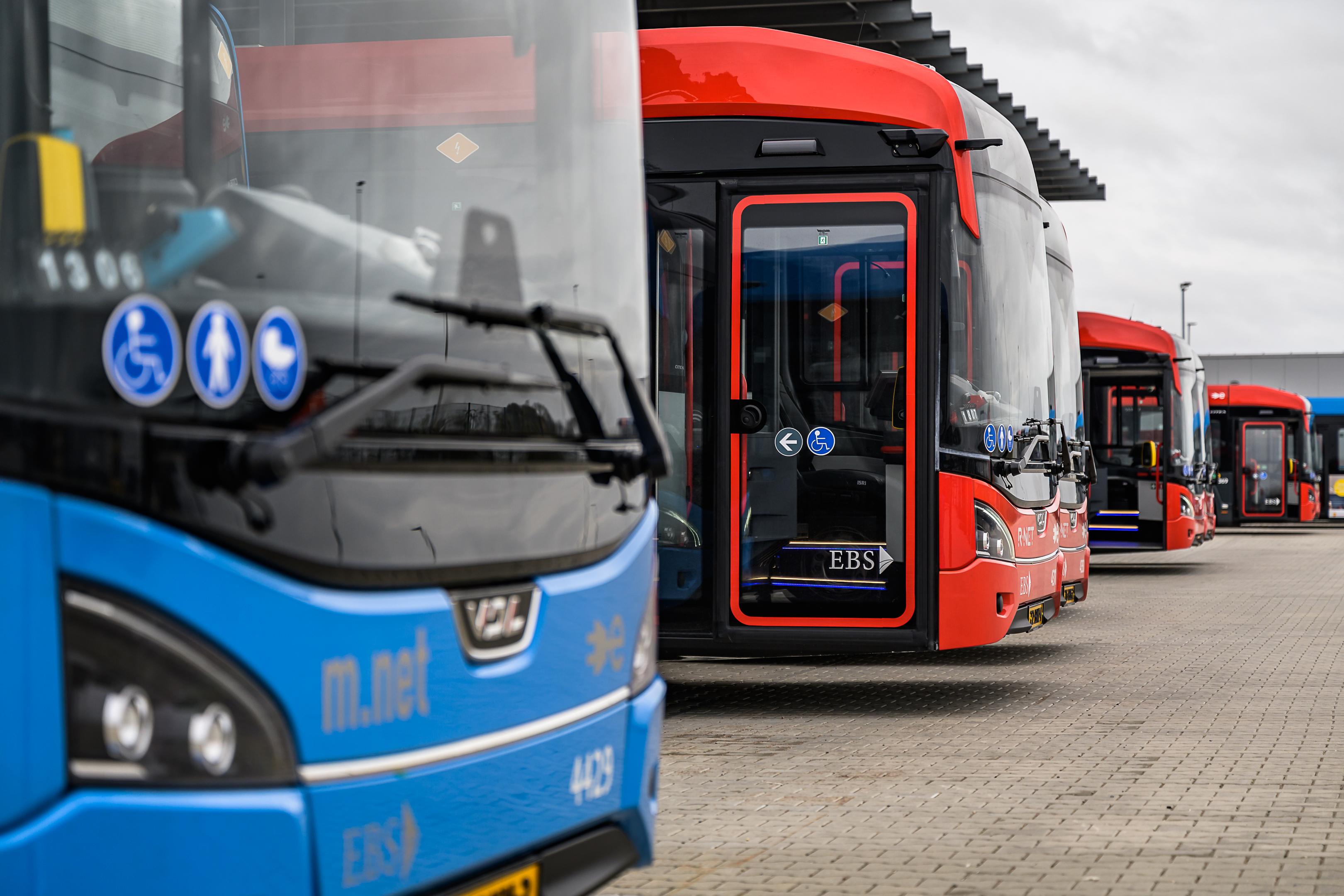
More than 200 EBS e-buses are now running on their own generated energy. In an area facing severe grid congestion, two new bus depots provide energy security and operational reliability. The result: a fleet that departs fully charged every day, lower CO₂ emissions, and a significant step forward in the energy transition.
About EBS
EBS operates regional public transport services in parts of the Metropolitan Region Amsterdam region on behalf of the Amsterdam Regional Transport Authority (Vervoerregio Amsterdam). The company is investing heavily in the transition to clean, electric public transportation. For its new depots, this meant ensuring that more than 200 electric buses could be charged reliably every day.

The challenge
The ambition was clear. The buses were ready. But the electricity grid was not.
- Electricity demand exceeds the available grid capacity.
- During the winter months, no power could be drawn from the grid between 07:00 and 18:59. Precisely when charging was needed most.
- Upgrading the grid connection was not an option because the grid was already at full capacity.
- Without a solution, the fleet could not operate reliably, putting the service schedule at risk.
- EBS needed to reduce its environmental footprint, but the lack of a stable energy supply threatened to slow down its sustainability ambitions.
“With iwell’s smart battery system, we not only found a solution to our grid capacity challenges, but also implemented an integrated approach that supports both sustainability goals and operational efficiency.”
Kaj Mook
Concession Manager, EBS Zaanstreek-Waterland
The solution
Together with EBS and the local grid operator, iwell developed an integrated energy system that provides control over power availability, even under the strictest grid constraints. The solution combines battery storage, solar energy, and intelligent energy management into one seamlessly integrated system.
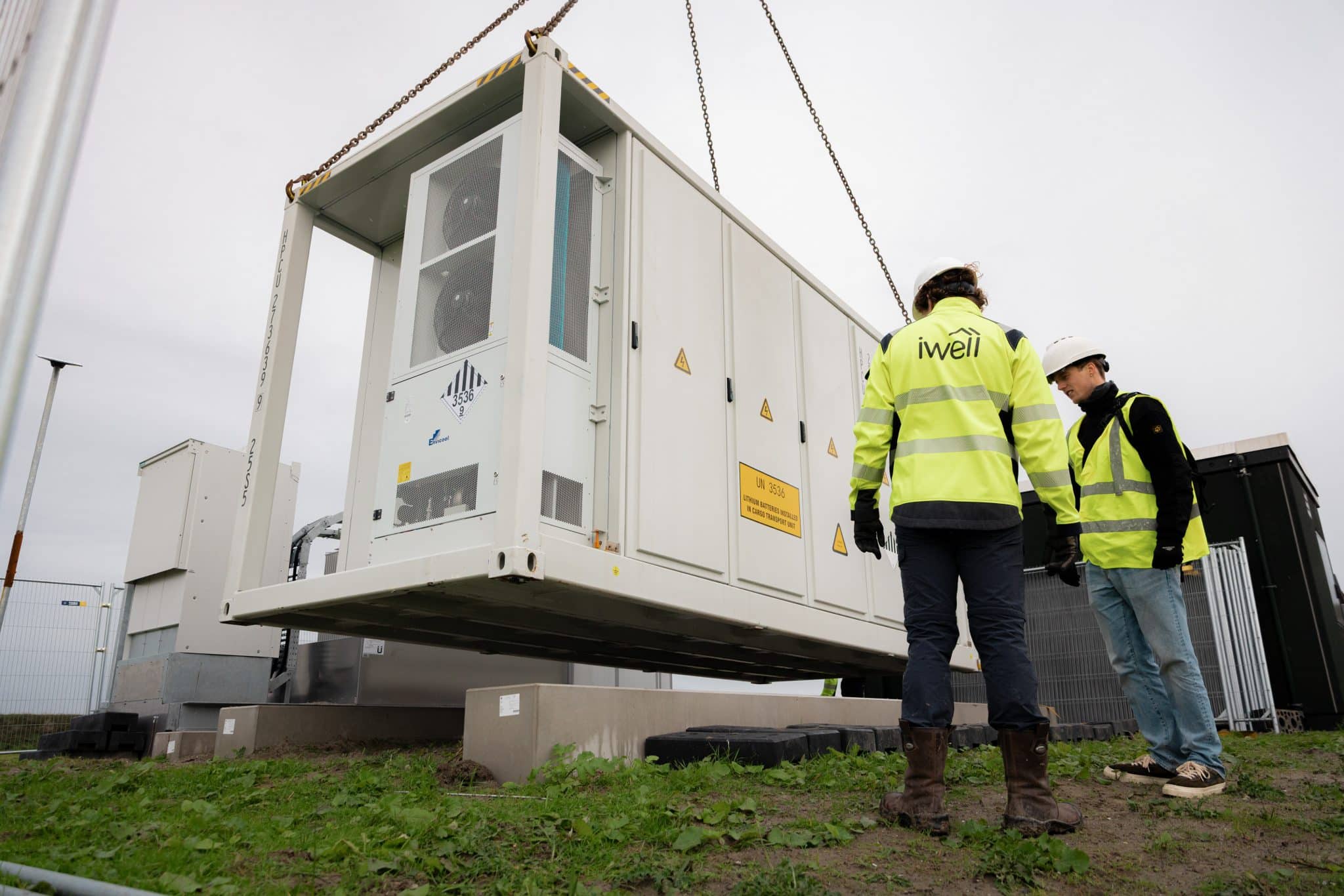
- Battery storage as a buffer: at depot 1 (1 MW / 2.15 MWh) and depot 2 (2 MW / 4.3 MWh) battery systems store energy during off-peak hours. This stored energy is then used during peak demand periods or when grid access is restricted, ensuring that charging infrastructure remains available at all times.
- Maximizing solar energy: solar carports at both locations generate renewable energy on-site. The Energy Management System (EMS) determines whether this energy should be stored in the batteries or used directly to charge buses, maximizing self-consumption and efficiency.
- Intelligent Energy Management System (EMS): the EMS acts as the brain of the operation, aligning charging strategies with EBS’s bus schedules. This ensures that the right buses are fully charged and ready when needed. The system even takes external factors into account, including weather forecasts and available grid capacity.
- Additional revenue through Renewable Energy Units (HBE Certificates): because EBS charges its buses on-site using self-generated renewable electricity, it qualifies for Renewable Energy Unit certificates (HBE certificates). These certificates can be traded, creating an additional financial benefit alongside the operational and sustainability gains.

Electrification doesn't stop at grid congestion
Even under the most restrictive grid conditions, fleet electrification remains achievable. By intelligently combining energy storage, local renewable generation, and advanced energy management, the Netherlands' largest electric bus depot continues to operate reliably every day.


Cases
EBS

East Green Energy

Do the quick scan
Answer a few short questions and discover how we can turn your energy challenge into a business case.